Why Garage Door Springs Matter the Most
Most homeowners mistakenly believe the electric opener is the muscle behind their garage door. In reality, the garage door springs do the heavy lifting, supporting the door’s massive weight every time it moves. Because they are under immense tension, springs are the most critical component of the system – and the most likely to break.
Understanding how long these springs last is essential for home maintenance and safety. While a standard spring might last 7 to 10 years on paper, real-world variables like usage frequency, climate, and maintenance habits can dramatically alter that timeline.
The “Cycle Life” Reality: It’s About Use, Not Years
Unlike a roof or a water heater, garage door springs are not rated by time. They are rated by cycles. One cycle equals opening the door once and closing it once. The lifespan of your springs depends entirely on how often you burn through these cycles.
- Standard Springs: Most builder-grade springs are rated for 10,000 cycles.
- High-Cycle Springs: Premium springs can be rated for 25,000 to 50,000+ cycles.
To understand how long this lasts in calendar years, you have to do the math based on your household’s daily routine:
| Daily Usage | Estimated Lifespan (10k Cycle Spring) |
|---|---|
| 2 Cycles (Morning/Evening commute) | Approx. 13-14 Years |
| 4 Cycles (Average family use) | Approx. 7 Years |
| 8+ Cycles (Active family with kids) | Approx. 3-5 Years |
“It also goes on usage. If you’re using it as a front door, those springs are going to last you… right at that two-year mark. However, if you’re a retired couple that goes out once a week, that two year spring can last you six.”
— Joshua Zdroik, Service Manager
Factors That Shorten Garage Door Spring Life
Beyond simple cycle counts, environmental factors and neglect can prematurely kill a spring before it reaches its rated lifespan.
1. Rust and Corrosion
In humid climates or areas with salt air, rust is the enemy. Rust increases friction between the coils and weakens the steel, leading to early failure. Corrosion can cause springs to fail significantly faster than their rated cycle count.
2. Cold Weather
Steel contracts in cold temperatures. If you live in a region with freezing winters, your springs are more brittle and susceptible to snapping during the colder months.
3. Lack of Maintenance
Springs are moving metal parts that generate friction. Without proper lubrication, the coils bind and grind against each other, increasing wear and noise.
Maintenance: The Secret to Garage Door Spring Longevity
You can extend the life of your springs by performing simple maintenance. Industry experts recommend lubricating your garage door springs every 3 to 6 months.
How to Lubricate Your Garage Door Springs:
- Close the garage door completely.
- Use a specialized Garage Door Lubricant or Silicone Spray.
- AVOID WD-40: Standard WD-40 is a degreaser, not a lubricant, and can actually strip protective coatings and attract dust.
- Lightly spray the length of the spring coils.
- Open and close the door to work the lubricant in.
Torsion vs. Extension Springs
The type of spring system you have also dictates longevity and safety.
- Torsion Springs: Mounted on the wall above the closed door. They generally last longer and are safer because they are contained on a shaft.
- Extension Springs: Mounted on the sides of the track and stretch out. They typically have shorter lifespans and more moving parts that can wear out.
Danger Zone: Why You Should Never DIY Your Garage Door Springs
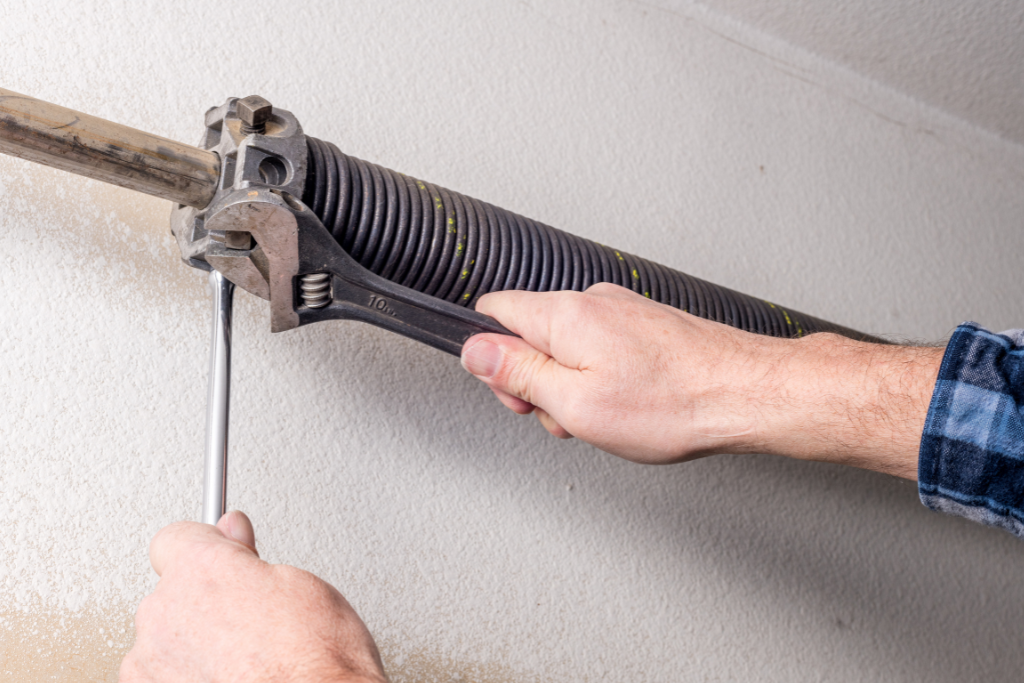
Garage door springs are under enough tension to lift a 200+ pound door. If a spring snaps or releases tension unexpectedly during a DIY repair attempt, it can cause severe injury or even death.
Critical Safety Warning: Never attempt to wind, unwind, or adjust torsion springs yourself without proper training and tools. The stored energy in a wound spring is incredibly dangerous.
If your door struggles to open, makes loud banging noises, or has a visible gap in the spring coils, call a professional immediately. Attempting to operate a door with a broken spring can burn out your expensive electric opener motor.