

Yes, you can sometimes open a garage door with a broken spring manually, but it can be dangerous and should only be attempted when absolutely necessary. When a garage door spring breaks, the door loses the counterbalance that helps support its weight. This can make the door extremely heavy, difficult to control, and potentially dangerous if it falls.
Do not use your automatic garage door opener to force a garage door open when the spring is broken. Doing so can put excessive strain on the opener and other components. The safest option is to leave the garage door closed and have a professional replace the broken spring.
If you need to open the garage door because a vehicle is trapped inside, disconnect the opener only while the door is completely closed and get another adult to help. If the garage door is crooked, jammed, off its tracks, or has loose or damaged cables, do not attempt to open it.
How Garage Door Springs Work
Garage door springs are an essential part of the system because they counterbalance the weight of the door. Rather than requiring the garage door opener to lift the entire weight of the door, the springs provide much of the lifting assistance.
There are two primary types of garage door springs:
- Torsion springs: These springs are typically mounted on a shaft above the garage door. They twist as the door operates, storing and releasing energy to help raise and lower the door.
- Extension springs: These springs are usually installed along the horizontal tracks on either side of the garage door. They stretch and contract as the door opens and closes.
When a spring breaks, the garage door loses some or all of this counterbalance. The door may suddenly become extremely heavy, difficult to lift, uneven, or impossible for the automatic opener to operate properly.
Will a Garage Door Work With a Broken Spring?
A garage door may still move after a spring breaks, but that does not mean it should continue to be operated.
Depending on the type of garage door and spring system, you may notice:
- The garage door will not open.
- The opener runs, but the door only moves a few inches.
- The door feels unusually heavy when lifted manually.
- One side of the garage door rises higher than the other.
- The door becomes crooked or binds in the tracks.
- Cables become loose or come off their drums.
- The opener strains when attempting to lift the door.
Continuing to operate the garage door can potentially damage the opener, tracks, cables, rollers, panels, or other parts of the system.
If you suspect that the spring has broken, stop operating the door until you determine what has failed.
What Happens When You Open a Garage Door With a Broken Spring?
The springs are designed to offset much of the garage door’s weight. When a spring breaks, that assistance is reduced or eliminated.
As a result, several things can happen.
The Garage Door Becomes Extremely Heavy
A garage door can weigh hundreds of pounds depending on its size, construction, insulation, and materials. Without functioning springs, much more of that weight must be physically lifted when opening the door manually.
The Garage Door Can Become Unbalanced
If your garage door uses two springs and only one breaks, the remaining spring may continue providing assistance on one side of the system. This does not make the door safe to use.
Instead, the uneven spring force can cause the garage door to rise unevenly, become crooked, or bind in the tracks.
The Garage Door Could Fall
The same spring system that helps raise the door also helps control its movement. A garage door with a broken spring may not remain safely in the open position.
Never assume that a garage door with a broken spring will stay open by itself.
Other Garage Door Components Can Be Damaged
Repeatedly operating or forcing the door can put additional strain on the opener, cables, tracks, rollers, hinges, panels, and other components.
A broken spring that initially requires a relatively straightforward repair can potentially lead to additional repairs if the garage door continues to be used.
Can I Manually Open a Garage Door if the Spring Is Broken?
Yes, it may be physically possible to manually open a garage door when the spring is broken, but doing so is not recommended unless opening the door is absolutely necessary.
Without the spring helping support the door, you may be attempting to lift a very heavy and potentially unstable object.
Before attempting to move the door, look for warning signs such as:
- A crooked or uneven garage door
- Loose or hanging cables
- Rollers that have come out of the tracks
- Bent or damaged tracks
- Damaged door panels
- A door that is already partially open
- A door that becomes stuck when you attempt to move it
If you notice any of these problems, do not attempt to open the garage door manually. Contact a professional garage door technician instead.
How to Open a Garage Door With a Broken Spring
If you need to know how to open a garage door with a broken spring because a vehicle is trapped inside or there is another urgent reason to open the door, understand that manually lifting it can be hazardous.
Whenever possible, wait for a garage door professional rather than attempting to operate the door yourself.
If opening the garage door is absolutely necessary, follow these precautions.
1. Make Sure the Garage Door Is Completely Closed
Before disconnecting the garage door from the automatic opener, make sure the door is fully closed.
Do not pull the emergency release cord while a garage door with a broken spring is partially or fully open. Disconnecting the opener may remove something that is helping hold the door in position, allowing the door to fall.
If the garage door is already stuck open or partially open, keep people and pets away from it and call a garage door professional.
2. Disconnect the Garage Door Opener
Once you have confirmed that the garage door is completely closed, locate the emergency release cord. This is typically the red cord hanging from the garage door opener rail.
Pulling the emergency release disconnects the door from the automatic opener so that the garage door can be operated manually.
Do not repeatedly press the garage door opener button in an attempt to force the door open.
3. Inspect the Door, Tracks, and Cables
Before attempting to lift the garage door, inspect the system for obvious problems.
Look for:
- Loose or hanging cables
- A garage door that appears crooked
- Rollers outside the tracks
- Bent or damaged tracks
- Obstructions in the tracks
- Damaged panels or hardware
If anything appears damaged, loose, crooked, or out of position, stop and contact a professional.
4. Get Another Adult to Help
Do not attempt to lift a garage door with a broken spring by yourself.
Have at least one other capable adult assist you so the garage door can be lifted evenly from both sides.
Keep your hands away from hinges, rollers, tracks, cables, and the spaces between garage door sections.
5. Lift the Garage Door Slowly and Evenly
Lift from the bottom of the garage door slowly and evenly.
Pay attention to how the door moves. Stop immediately if:
- The door feels too heavy.
- One side rises faster than the other.
- The door becomes crooked.
- The rollers begin binding in the tracks.
- You hear unusual noises.
- The door becomes difficult to control.
Never force the garage door to continue moving.
If you cannot lift it safely, carefully lower it back to the closed position and wait for professional assistance.
6. Secure the Garage Door Before Going Under It
A garage door with a broken spring may not remain open on its own.
If the door must temporarily remain open, it needs to be securely supported so that it cannot fall unexpectedly.
Never walk, stand, or allow anyone else underneath a garage door that is not securely supported.
How to Open a Garage Door if the Torsion Spring Is Broken
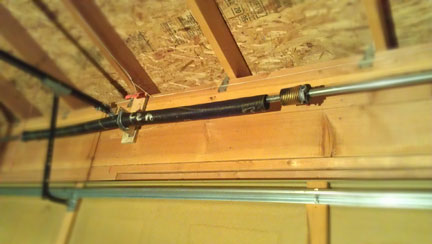
If your garage door uses a torsion spring system, the spring is normally mounted horizontally above the garage door.
One of the most obvious signs of a broken torsion spring is a visible separation or gap in the spring.
When a torsion spring breaks, the garage door loses the lifting assistance that spring normally provides. As a result, the door may be extremely heavy when you attempt to lift it manually.
Some garage doors use two torsion springs. If one breaks, the second spring may still provide some assistance, but you should not assume that the door is safe to operate. The garage door may still be heavy or unbalanced.
If the door is uneven, extremely heavy, or difficult to control, do not attempt to open it.
What if an Extension Spring Is Broken?
Extension springs are generally located along the sides of the garage door near the horizontal tracks.
If an extension spring breaks, one side of the garage door may lose the spring assistance it needs. This can cause the door to become uneven or crooked when someone attempts to open it.
You may also encounter loose cables or damaged spring hardware.
Do not attempt to manually operate the garage door if:
- One side is significantly higher than the other.
- A cable is hanging loose.
- Spring components are hanging or displaced.
- The garage door has come out of its tracks.
These conditions require professional attention.
Can You Use a Garage Door Opener With a Broken Spring?
You should generally not use an automatic garage door opener when the spring is broken.
Garage door openers are designed to move a properly balanced garage door. The springs provide much of the assistance required to lift the door.
Without functioning springs, the opener may be forced to lift substantially more weight than it was designed to handle.
Trying to use the opener can potentially:
- Damage or strip opener gears
- Overheat or damage the motor
- Damage the trolley or rail
- Pull on or damage garage door panels
- Cause the door to become misaligned
- Put additional stress on cables and other hardware
If your opener strains, stops after moving the door only a few inches, or cannot lift the door, stop using it.
Is It Bad to Force Open the Garage Door While the Spring Is Broken?
Yes. You should not force a garage door open when the spring is broken.
Forcing the garage door can create both safety problems and additional damage.
Risk of Injury
Without functioning springs, the garage door may be much heavier than expected. Attempting to lift it can cause injuries to your back, shoulders, hands, or arms.
More importantly, an unstable garage door could descend unexpectedly.
Risk of the Door Becoming Crooked
A broken spring can cause uneven forces on the garage door. If the door is forced upward, one side may move faster than the other.
This can cause the rollers to bind or potentially come out of the tracks.
Risk of Additional Garage Door Damage
Forcing the garage door can damage:
- Tracks
- Rollers
- Cables
- Hinges
- Panels
- Garage door opener components
Instead of forcing the door, stop operating it and have the broken spring repaired.
Quick Guide: Should You Open a Garage Door With a Broken Spring?
| Situation | Should You Open the Door? | Recommended Action |
|---|---|---|
| Spring is broken but the garage door is closed | Avoid opening if possible | Schedule professional spring repair |
| Vehicle is trapped inside | Only if absolutely necessary | Disconnect the opener with the door closed and get assistance |
| Garage door is crooked or uneven | No | Stop and call a professional |
| Cable is loose or hanging | No | Do not operate the garage door |
| Garage door is off its tracks | No | Keep clear and call for repair |
| Opener strains but cannot lift the door | No | Stop using the opener |
| Garage door is partially open | Do not pull the emergency release | Keep clear and call a professional |
What to Do After Opening a Garage Door With a Broken Spring
If you successfully open the garage door, that does not mean it is safe to continue using it.
Avoid repeatedly opening and closing the garage door until the broken spring has been replaced.
If you opened the garage door because a vehicle was trapped inside, move the vehicle out if it is safe to do so. Then arrange for a garage door technician to inspect and repair the system.
A professional can determine whether the broken spring is the only problem or whether the failure has affected cables, tracks, rollers, the opener, or other components.
Frequently Asked Questions About Broken Garage Door Springs
Can you open a garage door with a broken spring?
Yes, it may be possible to manually open a garage door with a broken spring, but it can be dangerous. Without the spring counterbalancing the door’s weight, the garage door can become extremely heavy and unstable. Whenever possible, leave the door closed until the spring has been professionally replaced.
How do you open a garage door with a broken spring?
If opening the door is absolutely necessary, make sure the garage door is completely closed before disconnecting the automatic opener with the emergency release. Inspect the door for damaged cables, tracks, or rollers and have another adult help lift the door slowly and evenly. Stop if the door becomes crooked, binds in the tracks, or is too heavy to control.
Can you open a garage door with one broken spring?
A garage door with a two-spring system may still have one functioning spring after the other breaks, but that does not mean the door is safe to operate normally. The garage door may remain extremely heavy or become unbalanced.
Will a garage door opener work with a broken spring?
A garage door opener may attempt to operate the door after a spring breaks, but you should not rely on it to lift the door. The opener is designed to move a garage door that is properly counterbalanced by its springs. Continuing to use it can potentially damage the opener or other garage door components.
Can a garage door fall if the spring is broken?
Yes. A broken spring can make a garage door difficult to control, and a raised garage door may descend unexpectedly. Never stand or walk underneath an improperly supported garage door.
Can I replace a broken garage door spring myself?
Garage door springs operate under significant tension, and replacing them requires the correct parts, tools, and procedures. Incorrect spring installation or adjustment can cause serious injury or damage. Garage door spring replacement is generally best handled by a trained garage door technician.
Should both garage door springs be replaced if one breaks?
If your garage door has two springs and they were installed at the same time, both may have experienced approximately the same number of operating cycles. A garage door technician can inspect the system and determine whether replacing both springs is appropriate.
Always Seek Professional Help for a Broken Garage Door Spring
Although it may be possible to manually open a garage door with a broken spring, the safest solution is usually to leave the door closed and have the spring repaired.
A broken spring affects the balance of the entire garage door system. Continuing to operate the door can create safety risks and potentially damage other components.
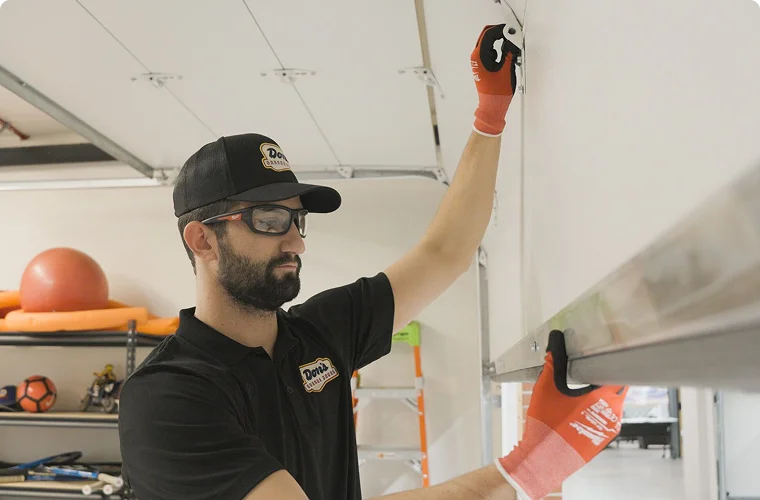
Don’s Garage Doors provides professional garage door spring repair and can inspect the complete system to identify any additional problems caused by the broken spring. A technician can replace the damaged spring, check the cables and hardware, properly balance the door, and confirm that the garage door and opener are operating correctly.
If your garage door spring has broken, avoid forcing the door open or repeatedly operating the opener. Professional repair can restore the door’s proper balance and get your garage door operating safely again.
Whether you need garage door repair Columbus or garage door repair Powell, our technicians can safely replace your spring, realign the door, and ensure your garage door operates smoothly and safely. By contacting a professional for repairs, you can ensure that your garage door is fixed correctly, preventing any future issues and avoiding potential safety hazards.