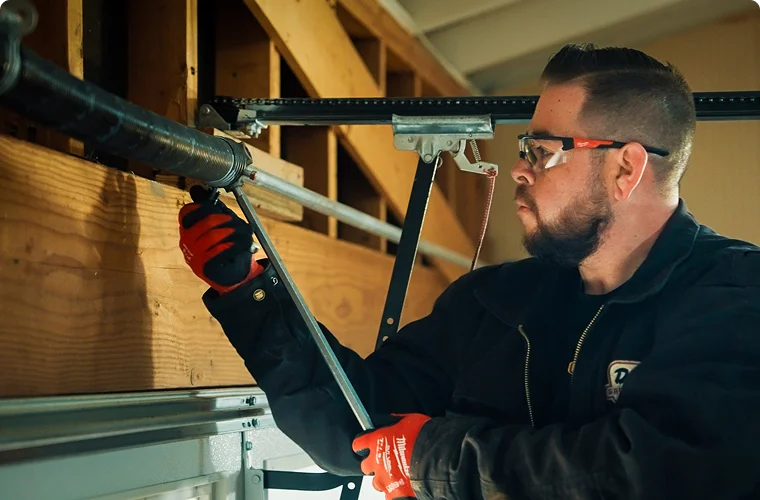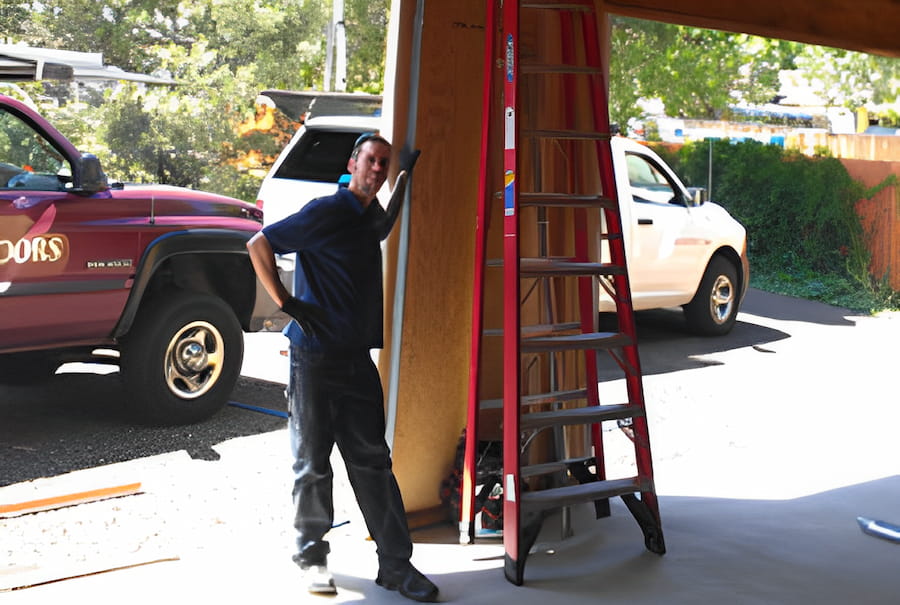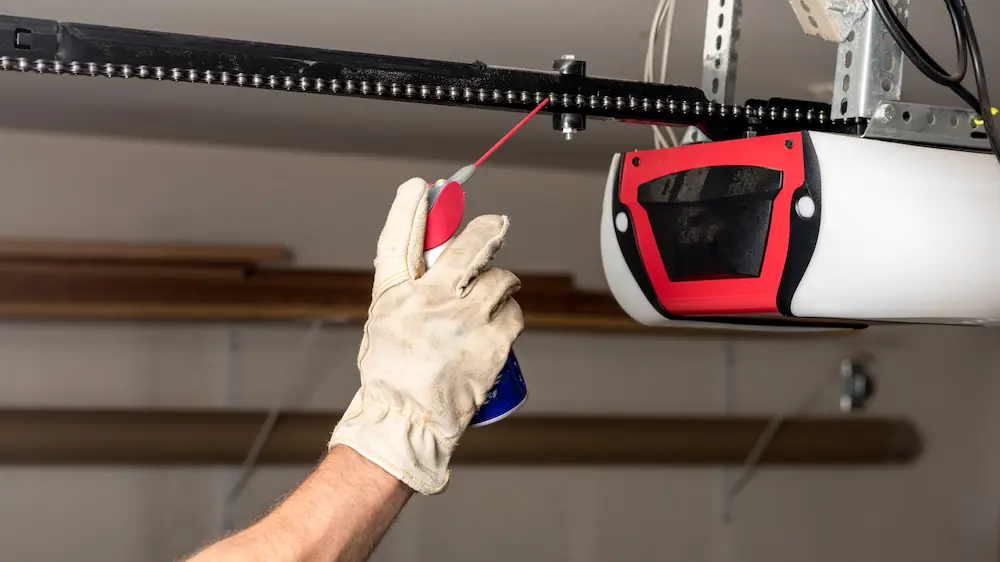

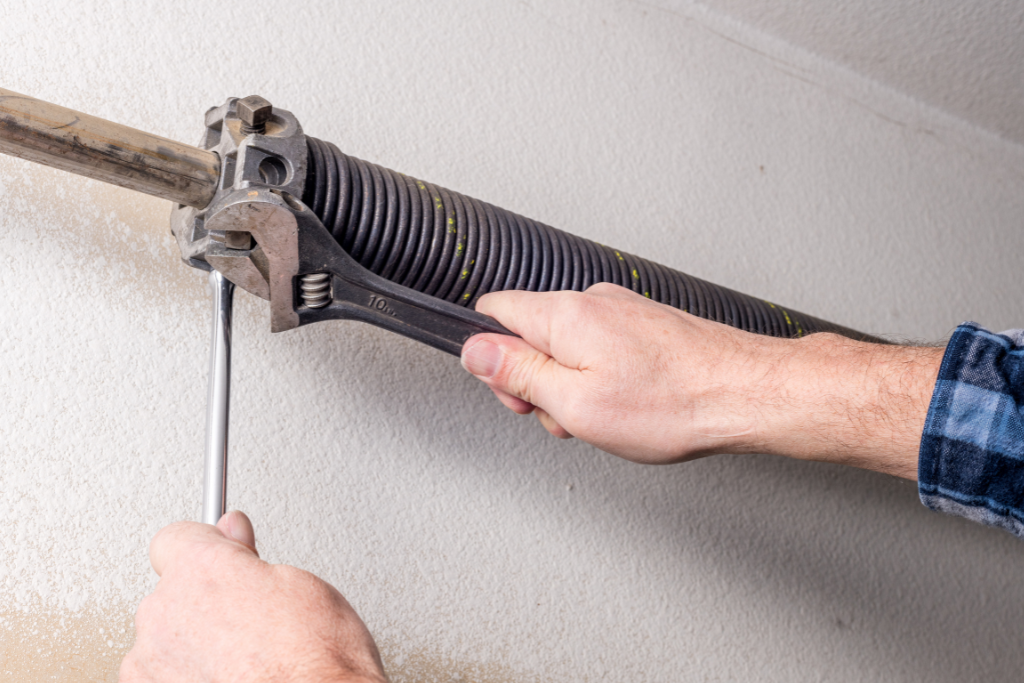
Most homeowners treat their garage door as a simple convenience: a button you press to get in and out of your house. But in reality, your garage door is likely the largest moving appliance in your home. It is a massive wall of steel suspended above your car and your family, held in place by high-tension springs and cables. When that system fails, or when it is installed incorrectly, it transforms from a convenience into a serious hazard.
At Don’s Garage Doors, we have seen it all: from motors old enough to crush a car to doors held together by sheer luck. In a recent interview, our area managers Seth Munstock and Joshua Zdroik shared some of the most alarming situations they’ve encountered in the field and the specific steps we took to make them safe again.
The “Cattywampus” Nightmare: Hanging by a Thread
One of the most terrifying examples of a dangerous door came from a call in Aurora, Colorado. A homeowner was desperate for a fix on a Friday afternoon after multiple other companies had refused to touch the door. When our technician arrived, the situation was critical.
The garage door was literally hanging by two rollers in the track. The vertical tracks were blown out, the door was “cattywampus” (crooked and jammed halfway up), and the hardware was failing. In this state, a garage door is a precarious deadfall trap. If the remaining rollers slipped or the track gave way, the entire door could have come crashing down.
The Fix
While the safest long-term solution was a full replacement, the homeowner needed an immediate solution to secure their home. Our team was able to:
- Fabricate custom bracing on-site to stabilize the tracks.
- Reset the rollers to get the door back into the guides.
- Replace the motor to ensure controlled movement.
However, we emphasized that this was a temporary stabilization. When a door system is that compromised, the structural integrity is often gone. We managed to get it running safely for the short term, but we always advise that repairing a “totaled” door is often throwing good money after bad. A standard garage door opener typically lasts 10 to 15 years, and pushing a system beyond that window on a damaged door is a gamble.
The Silent Crush Hazard: Pre-1993 Openers
Modern garage door openers are equipped with sensitive safety features that automatically reverse the door if it hits an object. But this wasn’t always the standard. Seth Munstock recalls the terrifying “force tests” technicians used to perform on older units.
“Back in the day, we would crank up an opener… you’d have the customer hit the button and have it shut on your shoulder to see how much force it was actually exerting,” Munstock said. “I’ve seen a house where they cranked the opener up and it shut on the back like a trunk of a car and dented the back of the car.”
These older units had manual dials on the back that allowed anyone to increase the downward force of the door, turning it into a crushing hazard. This danger is exactly why federal law changed in the early 90s.
The Fix
If you have an opener manufactured before 1993, the only safe fix is immediate replacement. Since January 1, 1993, federal law has required all garage door openers to be equipped with external entrapment protection systems, commonly known as “photo eyes” or safety sensors.
If your garage door opener does not have these sensors (small boxes mounted near the floor on the tracks), it is non-compliant and potentially deadly. Modern openers use internal software to monitor force, ensuring the door reverses instantly if it encounters resistance.
Wildlife Intruders: When Bears Bash In
In Colorado’s mountain towns like Evergreen and Golden, we face a unique danger: bears. A standard hollow-pan garage door is essentially a thin sheet of metal. It offers almost no resistance to a hungry black bear that smells trash or food inside a garage. We have seen cases where bears have punched straight through the steel panels to gain entry.
Bear break-ins are a documented issue in Colorado, with wildlife officials warning that once a bear learns it can breach a garage, it will likely return.
The Fix: Sandwich Steel & Polyurethane
To bear-proof a garage, we install high-performance “sandwich” style doors. These doors consist of a steel front, a thick layer of insulation, and a steel backing. The key is the type of insulation used.
| Feature | Polystyrene (Styrofoam) | Polyurethane (Spray Foam) |
|---|---|---|
| Structure | Loose panels inserted into the door | Injected foam that bonds to the steel walls |
| Rigidity | Moderate | Extremely High (solid feel) |
| R-Value | Typically R6 – R10 | Typically R12 – R18 |
We recommend doors injected with polyurethane insulation. Because the foam expands to fill 100% of the cavity and bonds to the steel skins, it creates a composite structure that is incredibly rigid. Munstock notes that while a bear might dent it, they are far less likely to punch through a 2-inch thick polyurethane-filled steel door compared to a hollow one.
The Secondhand Trap: Why Used Doors Are a Gamble
We often see homeowners trying to save money by buying used garage doors on Facebook Marketplace or Craigslist. This is a practice we strongly discourage due to the hidden dangers in the hardware, specifically the springs.
Garage door springs have a specific “cycle life”—a set number of times they can open and close before the metal fatigues and snaps. A standard builder-grade spring is typically rated for about 10,000 cycles.
The Danger
When you buy a used door, you have no way of knowing how many cycles are left on the springs. “The individual who buys that door doesn’t know how much use is on the spring,” Munstock explains. “If they wind the spring back up, it could break while they’re winding it.”
The Fix
If a customer insists on using a second-hand door, we generally refuse to install the old hardware. We require a safety overhaul that includes:
- New Springs: Calibrated exactly to the door’s weight.
- New Track & Rollers: To ensure the door travels smoothly without binding.
- Professional Inspection: To check for cracks or fatigue in the panels that aren’t visible to the untrained eye.
Is It Dangerous to Work on a Garage Door? Conclusion
Whether it is a 30-year-old motor, a bear-prone hollow door, or a “bargain” used door, the risks associated with garage doors are real. The best way to ensure your door remains a convenience rather than a danger is regular maintenance. We recommend a professional inspection once a year to catch issues, like fraying cables or unbalanced springs, before they become catastrophes.